

(An Inventory Story)
On humanity’s path to understanding the cosmos we find ourselves in, we didn’t start at zero. Our predecessors wrote a story through our DNA that spans 4 billion years of survival. While we will never know the trials and experiences of these great countless who came before, they gave us starting blocks to help us on our way. Within us are sacs. We are born with them. And when our early ancestors hunted prey, they discovered sacs within the animals. Stomachs, livers, kidneys, spleens, lungs, etc.
Our ancestor, like us, had the ability of bipedal motion which freed up their hands to perform any number of things. However, when hunting they would carry spears, but then once the hunt was successful, they then needed to use their hands to carry the prey back to the rest of their family. This is where the idea of inventory first saw its origins. If they could fashion pouches, they could collect several rabbits or birds and still be free to use a spear to continue hunting. Natures’ sacs didn’t have the best shelf life outside the animals’ bodies, but it was enough of a starting point for our ancestors to built upon the concept.
To summarize, once upon a time, in the dawn of human existence, our ancestors were simple gatherers, their possessions limited to what they could carry in their hands or on their backs. The concept of inventory was born out of necessity, as early humans began to recognize the value of certain objects for survival. Stones for tools, animal skins for warmth, and gathered food for sustenance became the rudimentary entries in humanity’s first inventory.
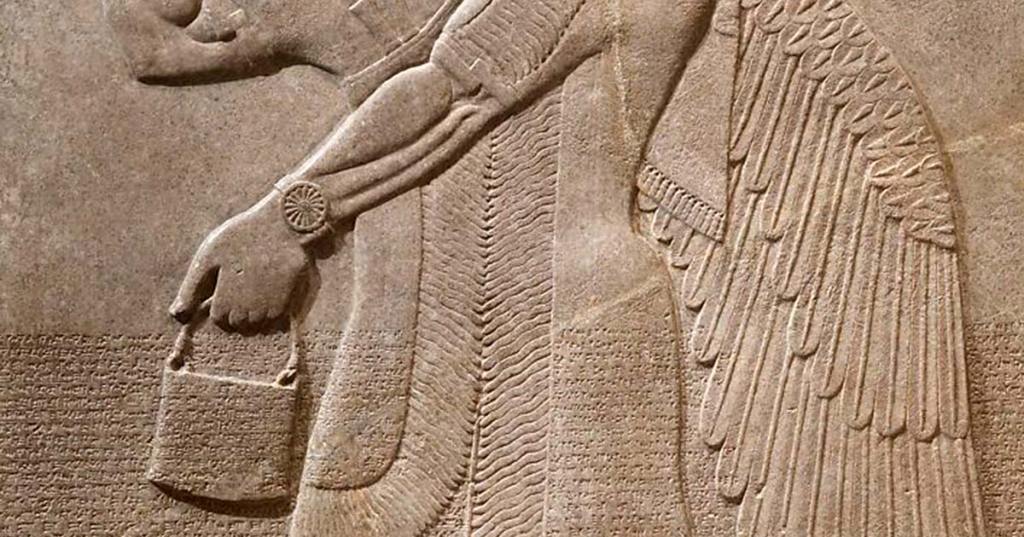
But get ready because as societies evolved and settled into agricultural communities, inventories expanded, and the human species saw a Cambrian explosion of sorts in the field of inventory. Clay tablets etched with cuneiform script documented surplus crops, livestock counts, and stored resources. The humble beginnings of inventory were marked by the need to ensure a community’s survival through the unpredictable seasons and occasional droughts.
The advent of trade brought a new dimension to inventory. As goods exchanged hands, meticulous records became essential for tracking transactions and ensuring fairness. Cuneiform gave way to ledgers, and the concept of wealth accumulation began to take root. Objects and resources were no longer just means of survival; they became symbols of status and power.
With the rise of empires and city-states, inventory management became more sophisticated. Warehouses stored treasures, and sprawling palaces housed the spoils of conquest. The accumulation of wealth became a pursuit in itself, and the desire for material possessions intensified. The medieval period saw the birth of commerce, and with it, the emergence of markets and merchants. Inventory now included exotic goods from far-off lands, and ledger entries grew more intricate. The Renaissance witnessed a flourishing of art and culture, and the elite amassed vast collections of paintings, sculptures, and rare artifacts, signalling a shift from utilitarian to aesthetic motivations for inventory.
The Industrial Revolution catapulted society into an era of unprecedented production and consumption. Factories churned out goods at an unprecedented pace, and the concept of inventory expanded to encompass mass-produced items. Warehouses grew larger, and the drive to accumulate possessions reached new heights. The 20th century brought about the age of consumerism. Advertising and marketing fuelled a culture that equated happiness with material acquisition. The concept of planned obsolescence ensured that possessions became ephemeral, driving a constant cycle of buying and discarding. In the 21st century, the digital age transformed inventory into a virtual realm. Online shopping, digital assets, and crypto-currencies became new entries in the ledger of human possessions. Social media platforms turned personal lives into curated inventories, where experiences, relationships, and achievements were displayed for public consumption.
Today, the uncontrollable need to accumulate objects and wealth has reached unprecedented levels. The pursuit of material success is deeply ingrained in modern society, fuelled by a global economy that thrives on consumption. The consequences of this insatiable desire are evident in environmental degradation, social inequality, and a growing sense of dissatisfaction despite material abundance. As humanity navigates the complexities of the 21st century, the story of our inventory continues to unfold. Will we find a balance between progress and sustainability, or will the unchecked accumulation of possessions define our legacy? Only time will tell as the narrative of human history, written in the ledger of our collective inventory, continues to evolve.
As always, I appreciate you being here, wish you nothing but love in your lives, and ask you to remember to keep on thinking. Thanks, and until next time, ciao for now. Peace.
 The Joe Van