

(And lying to ourselves)
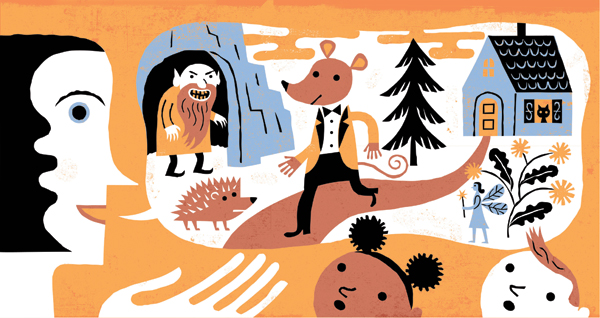
The human mind is a storyteller, constantly weaving narratives in every moment of our existence. From the moment we wake up to the time we drift into dreams, our minds are tirelessly constructing stories about ourselves, the world around us, and the people we encounter.
At the core of this narrative mind is the innate human need for coherence and meaning. We crave understanding, and stories provide a framework for organizing our experiences into a coherent whole. Our minds sculpt the raw material of reality into a narrative that gives shape to our identity, beliefs, and perspectives.
Consider the way we perceive ourselves. We are the protagonists of our own life stories, navigating through a plotline that is uniquely ours. The choices we make, the challenges we face, and the triumphs we celebrate all become part of the epic tale that is our life. In moments of reflection, we engage in introspective storytelling, interpreting our actions and assigning meaning to our experiences.
Simultaneously, we are also the storytellers of the world around us. Our perceptions of events, people, and places are filtered through the lens of narrative. We create heroes and villains, build alliances and conflicts, and impose order on the chaos of reality.
The world becomes a stage upon which the dramas of our lives unfold. Interpersonal relationships are fertile ground for the narrative mind. We craft stories about others based on our observations, interactions, and emotions.
These narratives shape our understanding of people, influencing our connections and conflicts. The stories we tell ourselves about others can be a source of empathy or prejudice, understanding or misunderstanding.
The narratives we construct are not static; they evolve with every experience, challenge, and revelation. As we move through time, our life story becomes an ever-expanding tapestry of interconnected narratives. We revise, edit, and reinterpret, adapting our internal stories to accommodate new information and evolving perspectives.
Yet, the narrative mind is not always a reliable narrator. It can be prone to bias, distortion, and self-deception. We may selectively remember events, emphasize certain details, or create convenient narratives that align with our desires or fears. Our perception of reality is, to a large extent, shaped by the stories we tell ourselves.
Understanding the narrative mind is a key to self-awareness. It invites us to critically examine the stories we construct, question their origins, and consider alternative narratives. By recognizing the power of storytelling in shaping our beliefs and behaviours, we gain the capacity to rewrite our stories and, in doing so, redefine ourselves and our place in the world.
Beyond the individual level, the influence of narratives extends to the very fabric of society. Institutions, systems, and the fundamental structures that govern human interactions are built upon shared narratives. These narratives serve as the cultural glue that binds communities together, providing a common understanding of reality and shaping the rules that govern social dynamics.
Consider the legal system, a complex network of rules and regulations designed to maintain order and justice within a society. The entire legal framework is essentially a narrative—a story we collectively agree upon to define what is right and wrong, just and unjust. The concept of justice itself is a narrative construct, reflecting our shared values, ethics, and cultural beliefs.
Similarly, money, a cornerstone of modern economies, is a narrative-driven system. The value we assign to currency is not inherent; it is a collective agreement, a shared story that gives meaning to pieces of paper or digital numbers. The economic narratives we create shape our understanding of wealth, value, and success, influencing individual aspirations and societal structures.
Language itself, the very tool we use to communicate and share ideas, is a narrative construct. Words are symbols imbued with meaning, and the arrangement of these symbols forms stories, whether in the form of literature, history, or everyday conversation. Language shapes our perception of reality, influencing how we think, what we believe, and how we relate to one another. In essence, society is a grand tapestry woven from countless interlocking narratives.
These narratives define cultural norms, societal expectations, and the shared beliefs that guide collective behaviour. Social institutions, from education to religion, are vehicles for transmitting and reinforcing these narratives, ensuring they are passed down from one generation to the next.
However, like individual narratives, societal narratives are not immune to bias, contestation, and change. Power dynamics play a significant role in shaping dominant narratives, and marginalized voices often struggle to be heard within the broader societal story.
Recognizing and challenging these dominant narratives is a crucial step toward fostering a more inclusive and just society. Moreover, societies undergo narrative shifts over time. Cultural, technological, and economic changes can challenge existing narratives and give rise to new stories that redefine long held constructs.
The evolution of societal narratives is evident in historical movements, revolutions, and cultural shifts that reshape the way we collectively understand ourselves and our place in the world. Understanding the pervasive influence of narratives in society is the first step to hopefully prompting us all in engaging with a more critical analysis or norms.
By questioning the narratives that underpin our institutions and systems, we open the door to progress, cultural evolution, and the possibility of a more equitable and compassionate society. In this way, the power of narratives extends far beyond individual introspection—it shapes the very foundations of our species at large.
This is kind of a side note but I heard once someone describe cities and countries as organisms, how like a human body, these places are multi-cellular and dependant on the community within it.
Just like the individual, societies rely on the fabrics that made it. Unlike peoples’ physical bodies however, they can completely change over time, for good or ill. It’s poetic descriptions for things we have otherwise made our minds up about that I love so much about the narrative mind, but then for people to deny basic facts like the Earth’s curvature make me hate the same machine which underlies it all.
Narration is at the end of the day a tool, a blade if you will, with double edges. Like pattern-seeking, narratives are hardwired into us and here to stay. It can be manipulated, trained, but never ignored, so, you must choose how you deal with yours fittingly.
As always, I appreciate you to no end, wish nothing but love in your lives, and ask you to remember to keep on thinking. Thank you and until next time, ciao for now. Peace.
 The Joe Van